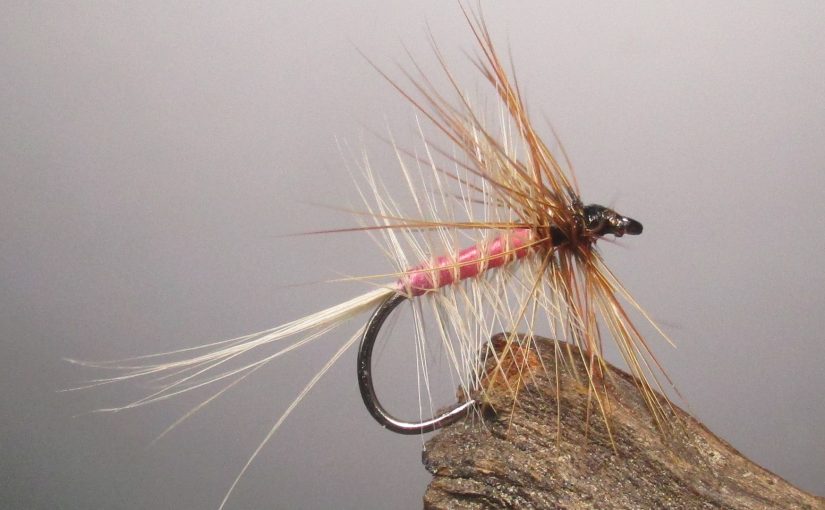
I found this pattern in “Fly Tying” by William Bayard Sturgis, published in 1940. If this isn’t a forgotten fly, it’s at least not a very well known one.
- Hook: #12-14 dry fly
- Thread: Black
- Tail: Light ginger hackle fibers
- Hackle: Light ginger palmered
- Body: Pink floss
- Collar hackle: Greenish/yellow (per Sturgis’ recipe)
Now, I’ve got a pretty interesting pattern for you today. I’m still working on my spring brook trout fly box, which pretty much means attractor dry flies. So, I started flipping through some of my old books, and I found a pretty neat pattern in William Bayard Sturgis’ “Fly Tying” from 1940. Sturgis had 33 dry flies in the book. A lot of them you will have heard of but there were a couple that I’d never seen or heard of. As I’m fairly well-read in archaic fly tying literature, I’m leaning toward calling a couple of these forgotten flies.
So, the one I chose to add to my box is a Pink Lady Bi-visible. Now, plenty of us have heard of the Pink Lady. Many of us have probably tied it, even fished it. But tied as a Bi-visible? That was pretty new to me. It’s really pretty simple– just a pink floss body with a light tail and then hackle palmered up through the body. And one thing Sturgis did mention in the recipe, he called for either a green or a yellow hackle up front. I tied one with green and it just didn’t look right. So that part of the fly I’m going to keep kind of closer to the original Bi-visible and use a brown hackle up front. But still, this is a pretty cool looking fly.