Tying the Foam Hat Sulphur Dry Fly


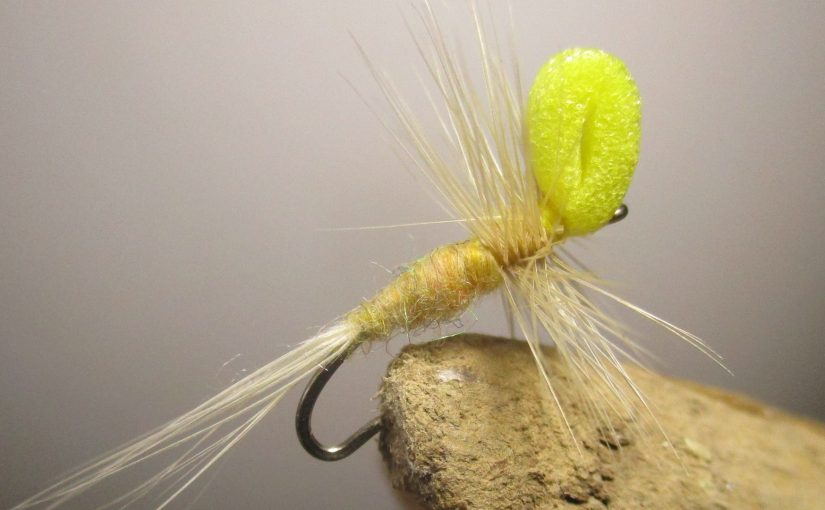
This foam-headed generic mayfly has brought me a lot of success this past year. Tied here as a sulphur, it can easily be turned into any mayfly you have a need to imitate. (Or a midge if tied small enough.)

  • Hook: #14-20, curved shank, 3x long
  • Thread: Any color to match the insect
  • Tail: Any color hackle fibers
  • Body: Any color dubbing
  • Hackle: Any color dry fly
  • Post: 2mm foam, any light color

I came up with this one last fall. I didn’t really invent it as I’m sure I saw a picture of it somewhere and thought, I can use this fly. So, how I tied it originally was small, in sizes 18s and 20s on a little curved shank, 3X long hook. But I was tying it as a midge and in standard natural colors– just a tail, body, and hackle. But I added one element to make it more fishable. A small foam loop, posted upright just in front of the hackle. And the fly did really well for me on a Savage River through December and into mid January.

Now the one I tied for the channel, I changed up a little bit. I made it bigger and turned it into a generic mayfly. In this case a sulfur, but in a bigger size as a generic mayfly, you could really make this pattern anything you want. It could easily be a March Brown, a PMD or a Blue Wing Olive. Just change the colors and the sizes accordingly.

And I typically fish this pattern in moderate to faster moving water. The fly is going to sit down on the surface film. The hackle, if you don’t put floatant on it, will keep it barely on the surface but the foam “hat” will stay just out of the water. Now one cool thing about this is that after fishing it through a faster riffle or run, it might be a few inches under the surface, but with the foam, it’s going to slowly come back up to the surface. That’s when it looks like an emerging insect or maybe just a drowned adult. And I’ve had fish take it both as it’s drifting slowly on the surface, and when it’s sunken a few inches.
Tying the Coyote Caddis Dry Fly


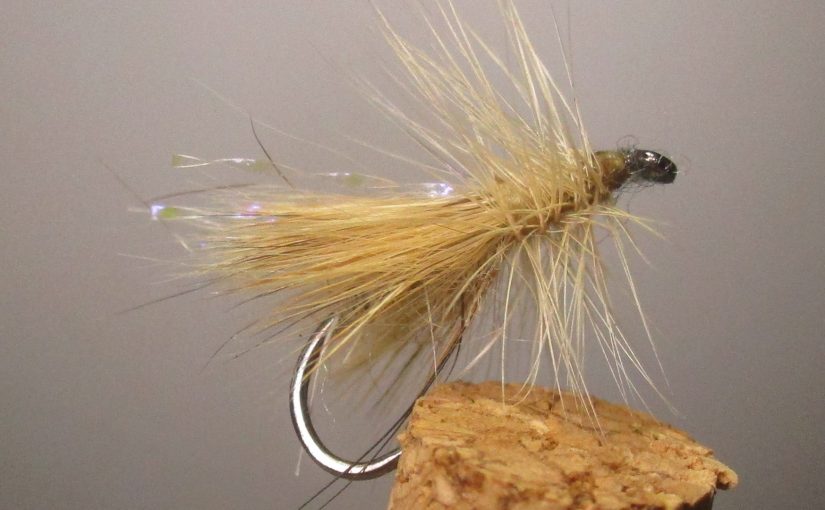
A simple caddis dry fly I came up with for water that is somewhere between smooth-as-glass and very fast and riffled.

  • Hook: #12-16 dry
  • Thread: Tan
  • Body: Tan dubbing (synthetic)
  • Wing: Coyote mask (or fine hair like rabbit or fox)
  • Overwing: Thin Crystal Flash
  • Hackle: Light tan or cream

I fish a lot of caddis dry flies here in the Mid-Atlantic and I’ve got patterns that work in both extremes– slow pools of crystal clear water, with the surface as smooth as glass, and very fast, choppy and riffled water. This pattern is a compromise between both of those situations.

How it’s different is, instead of something hollow or coarse for the wing like a deer hair or elk, I use a very soft fine fur. This one uses coyote but rabbit or fox would work as well. Anything that is fairly fine and will give just the slightest hint of movement as it sits in the surface film.

The Tropic Lightning – Attractor Dry Fly


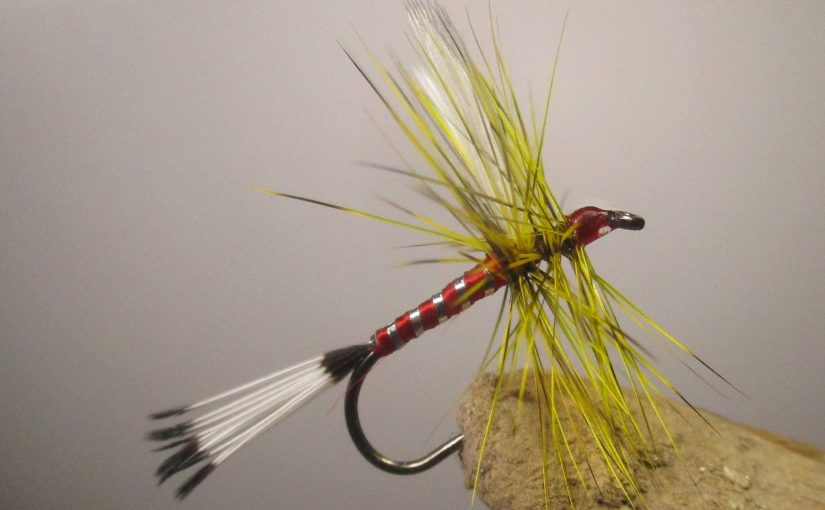
This simple yet colorful dry fly attractor pattern was designed as a tribute to Jared McClanahan’s uncle who was killed in action as a soldier with the 25th Infantry Division in Vietnam.

  • Hook: #12-16 dry fly
  • Thread: Red
  • Tail: Lady Amherst Pheasant Tippets
  • Wing: White Duck Slips
  • Rib: Silver Mylar Tinsel
  • Body: Red Floss
  • Hackle: Yellow

I’ve got an interesting pattern for you today, folks. A couple months ago I did a name the fly contest on the channel. The winning name for that one ended up being the Lemon Drop, which I think is a pretty cool name, but Jared McClanahan left a comment and said he’d like to name it the Tropic Lightning. He told me the backstory of his uncle, a soldier with the Tropic Lightning (the Army’s 25th Infantry Division), which is a pretty historic division dating back from before World War II to current day.

Jared’s uncle was a soldier with the 25th Infantry Division, also called the Tropic Lightning. And his uncle was very much a hero in Vietnam. The division’s HQ came under attack and while a lot of lives were lost that day, his uncle saved the lives of many of his fellow soldiers. He was actually recommended for the Medal of Honor. It was downgraded to a silver star, awarded posthumously as sadly, his uncle lost his life during the raid.

Jared and I emailed back and forth a few times, both coming up with designs on a pattern that we could call the Tropic Lightning. Now what we came up with is not a terribly complex pattern. It’s kind of a generic mayfly form, but it’s very much an attractor dry fly. If I catch anything with this this spring, I’ll certainly let you know. But if not, it was still a pretty fun one to tie and a pretty cool one to look at. So Jared, thank you for sharing your uncle’s story and helping me come up with this tribute fly.