The Lime Trude – a Brook Trout Attractor Pattern


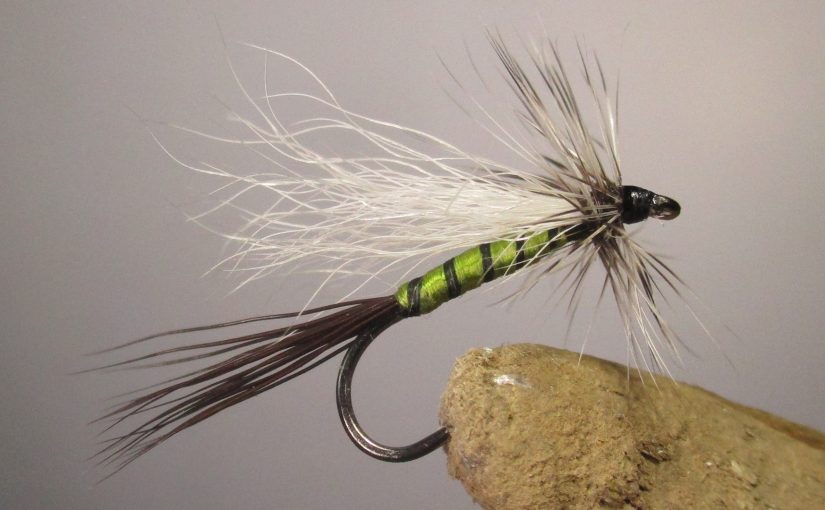
There’s no real name to this pattern, it’s just a simple dry fly attractor pattern with a calftail wing tied trude style.

  • Hook: #12-16 dry fly
  • Thread: Black (or the color of your rib)
  • Tail: Moose body hair
  • Body: Floss, any color
  • Rib: Tying thread
  • Wing: White calftail
  • Hackle: Any dry fly

This this fly has no history. I don’t even think it really has a name. It’s just the next one I’m putting in my spring brook trout dry fly box. It is a little reminiscent of one called the Lime Green Trude, with the tail and the body, and the white calftail wing tied trude style.

Now, if you don’t have any dry flies like this in your box, I would encourage you to give them a shot. And while calf tail is fairly buoyant, this fly is probably not going to be a high floater. It does have dry fly hackle up front which should keep it afloat, but the tail and body are probably going to sit down in the surface film. Even some of the white calf tail is going to get down in the surface film (by design), as I want the fist to see at least a bit of the wing. But what’s just as important to old guys like me with glasses, we should be able to see this fly from pretty long way off.

Now, it is not a hard tie, but I think it’s a pretty cool one.
Tying the Pink Lady Bi-visible Dry Fly


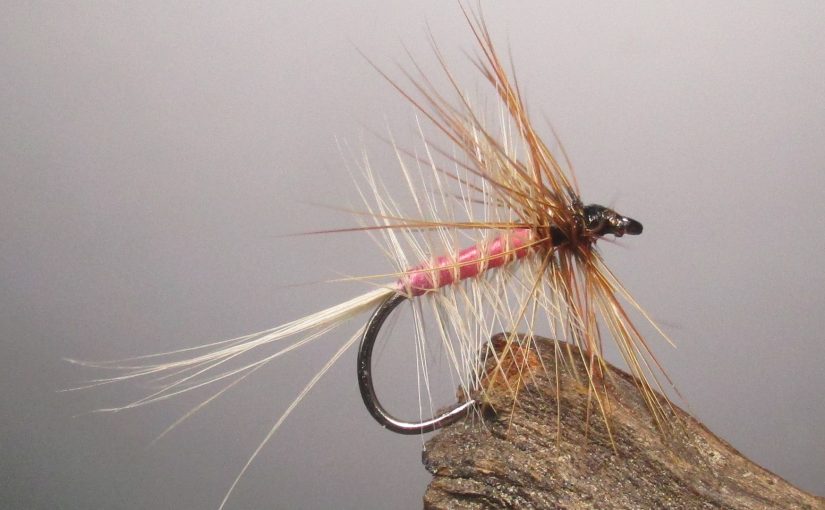
I found this pattern in “Fly Tying” by William Bayard Sturgis, published in 1940. If this isn’t a forgotten fly, it’s at least not a very well known one.

  • Hook: #12-14 dry fly
  • Thread: Black
  • Tail: Light ginger hackle fibers
  • Hackle: Light ginger palmered
  • Body: Pink floss
  • Collar hackle: Greenish/yellow (per Sturgis’ recipe)

Now, I’ve got a pretty interesting pattern for you today. I’m still working on my spring brook trout fly box, which pretty much means attractor dry flies. So, I started flipping through some of my old books, and I found a pretty neat pattern in William Bayard Sturgis’ “Fly Tying” from 1940. Sturgis had 33 dry flies in the book. A lot of them you will have heard of but there were a couple that I’d never seen or heard of. As I’m fairly well-read in archaic fly tying literature, I’m leaning toward calling a couple of these forgotten flies.

So, the one I chose to add to my box is a Pink Lady Bi-visible. Now, plenty of us have heard of the Pink Lady. Many of us have probably tied it, even fished it. But tied as a Bi-visible? That was pretty new to me. It’s really pretty simple– just a pink floss body with a light tail and then hackle palmered up through the body. And one thing Sturgis did mention in the recipe, he called for either a green or a yellow hackle up front. I tied one with green and it just didn’t look right. So that part of the fly I’m going to keep kind of closer to the original Bi-visible and use a brown hackle up front. But still, this is a pretty cool looking fly.