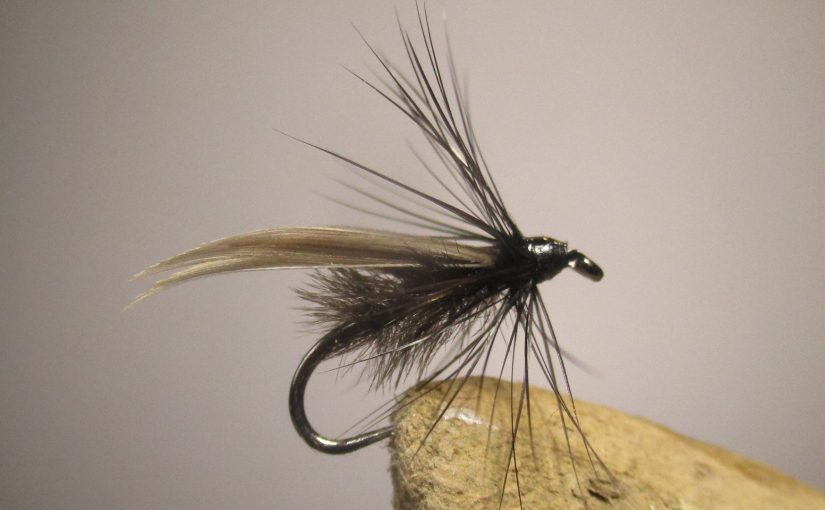
The Disco Midge – the easiest fly you may tie all year

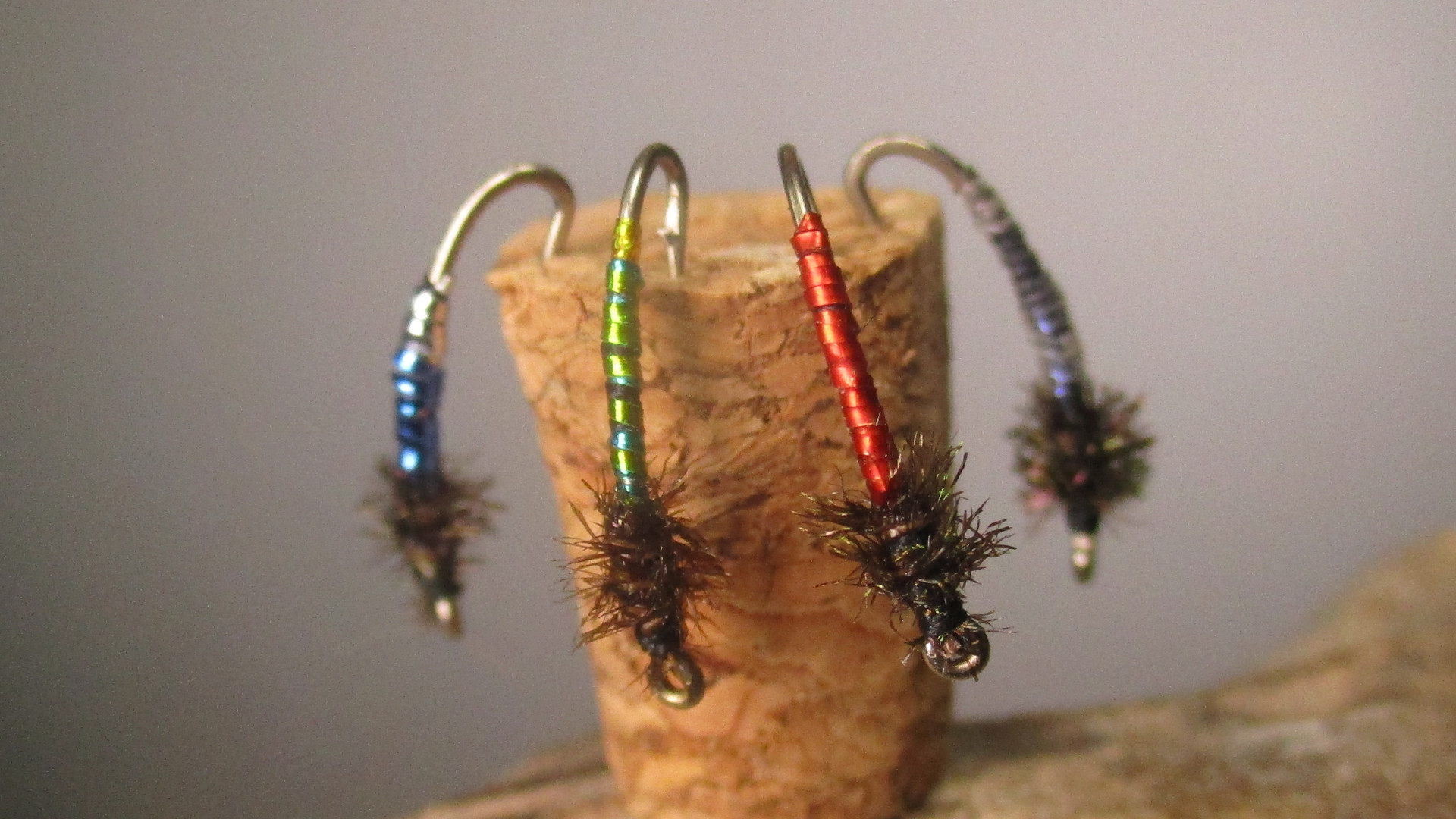
Created by Bill Fitzimmons and found in Dave Hughes' "Nymphs for Streams and Stillwaters," the Disco Midge is a chironomid pupa similar to the Zebra Midge but actually a bit easier to tie.

  • Hook: #18-22 3x Long, Curved Shank
  • Thread: Black
  • Body: Krystal Flash, any color
  • Head: Peacock Herl

Now, I've got a pretty cool pattern for you today, folks. I just got back from a week in the Smoky Mountains so stick around in the next week or so and I should have some footage of that trip. But tomorrow, I'm heading up to Big Hunting Creek, which is a pretty cool tailwater here in central Maryland. It's in the Catoctin Mountain National Park, just outside of Camp David. Fun fact- it was Presidents Eisenhower and Carter's local fishing water when they were at the presidential retreat.

The stretch I'm going to be fishing is called the Canyon. It's pretty high gradient, with some big boulders and fast riffles and chutes. So a lot of pocket water, but there are a few decent pools throughout. Of course I'll probably be fishing with dry flies, but I wanted a small lightweight nymph that I could hang as a dropper if I needed to. So I broke out Dave's Hughes’ “Nymphs for Streams and Stillwaters.” I found a cool pattern in here by Bill Fitzsimmons called the Disco Midge. Now, I'd heard of this pattern, but had never tied or fished it. It's similar to a zebra midge, and with only two materials just as easy to tie. It's got some crystal flash, any kind of crystal flash you have for the body. Then just a bit of peacock herl for the head. It’s literally about a one minute tie and even a new tier can knock out a row of these in just a few minutes.

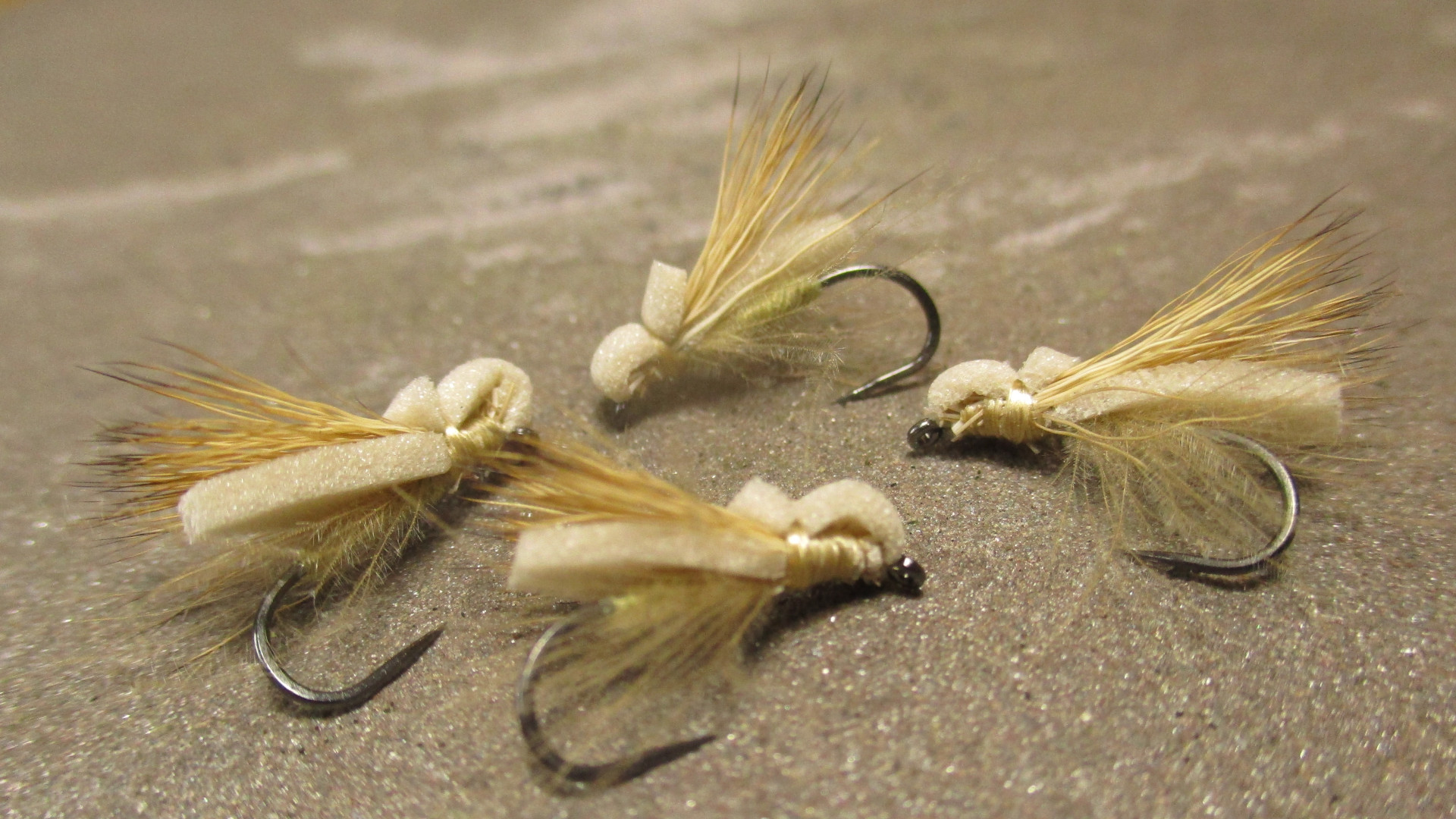
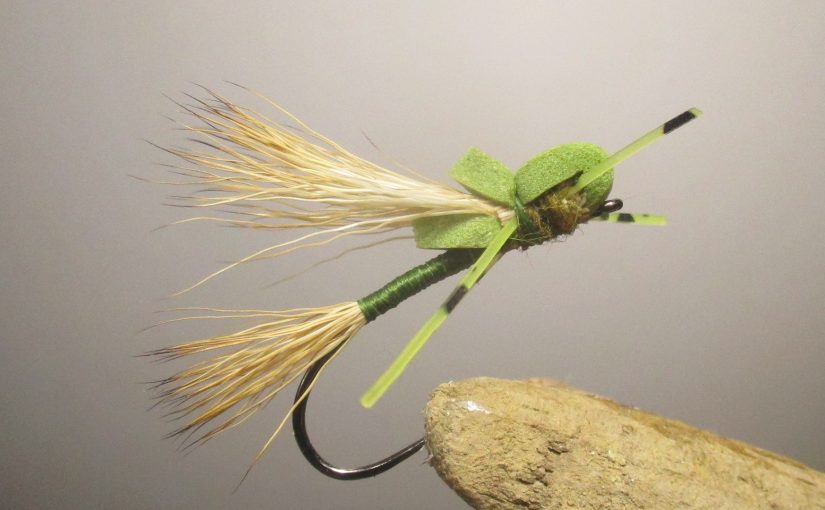
Tying a CDC Balloon Caddis

  • Hook: #12-16 dry fly
  • Thread: Tan, or to match body
  • Body: Dubbing or yarn, color to match your caddis flies
  • Underwing: Natural CDC under 1.5 mm foam
  • Wing: Natural deer hair (or elk)
  • Head: Foam, folded back

I actually wasn't planning on making a video of this one, but Jim Vatter brought it to my attention and I couldn’t resist. The last fly we did was a Madame X variation and Jim made the comment that that fly looked like a cross between a Madam X and a Balloon Caddis. And I'd never heard of a Balloon Caddis. And I fish caddis dry flies all the time! So, I looked it up and discovered that it's a pretty cool pattern.

Now there are a lot of versions of it out there but it turns out the distinguishing feature is a big foam head up front. I'm doing this one with a bit of a foam underwing as well. I think that part's up to you if you want to do that or not, but I want this thing to be more like a Neversink Caddis so a bit more foam couldn’t hurt. Check out the video below and let us know in the comments if you've ever tied or fished this one.

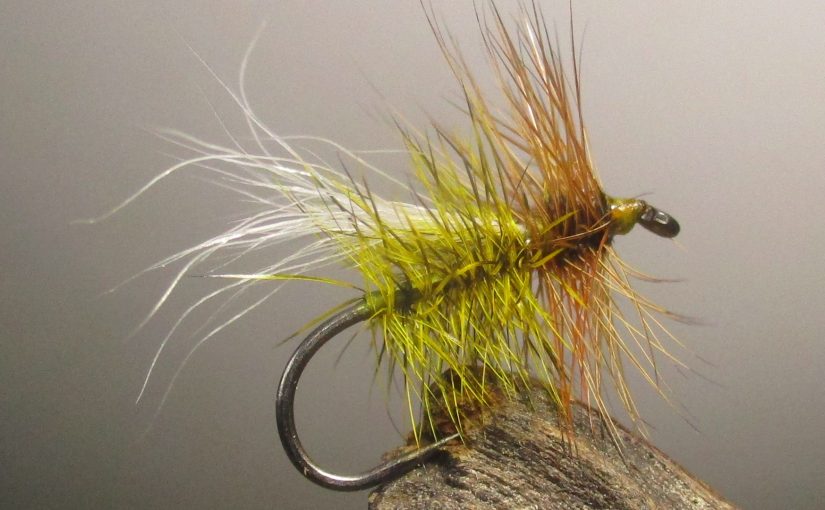
Tying the Taco Tuesday – a special fly pattern to me

  • Hook: #12-16 dry fly
  • Back half: Yellow dry fly hackle (undersized)
  • Wing: White calf tail
  • Front half: Brown dry fly hackle

This pattern came about from my last fishing video where I talked about my daughter and the daddy-daughter dates we always have on Taco Tuesdays. We started this tradition about 10 years ago when she was a bit younger and we've been doing it pretty much every week since. And now she is about to go off to college so these daddy daughter dates are going to be coming to an end pretty soon. Which is a bit sad for an old dad like me.

But I got a notable comment from Seth Goodwin who said, "You should just come up with a fly and call it the Taco Tuesday!" I thought that was a pretty cool idea so I told my daughter that I was going to come up with a fly and call it the Taco Tuesday.

I asked her what colors we should use and she said, "Obviously a yellow to maybe represent the cheese, or the shell. And then some brown for the meat." She also said green for the lettuce, but try as I might, I couldn't figure out how to work green into this pattern.

So, what I came up with is basically a yellow and brown Bi-visible (without a tail) but a wing of white calftail tied trude style. I think it turned out to be a pretty cool pattern. I have no idea how well it will fish but it was a fun one to tie.

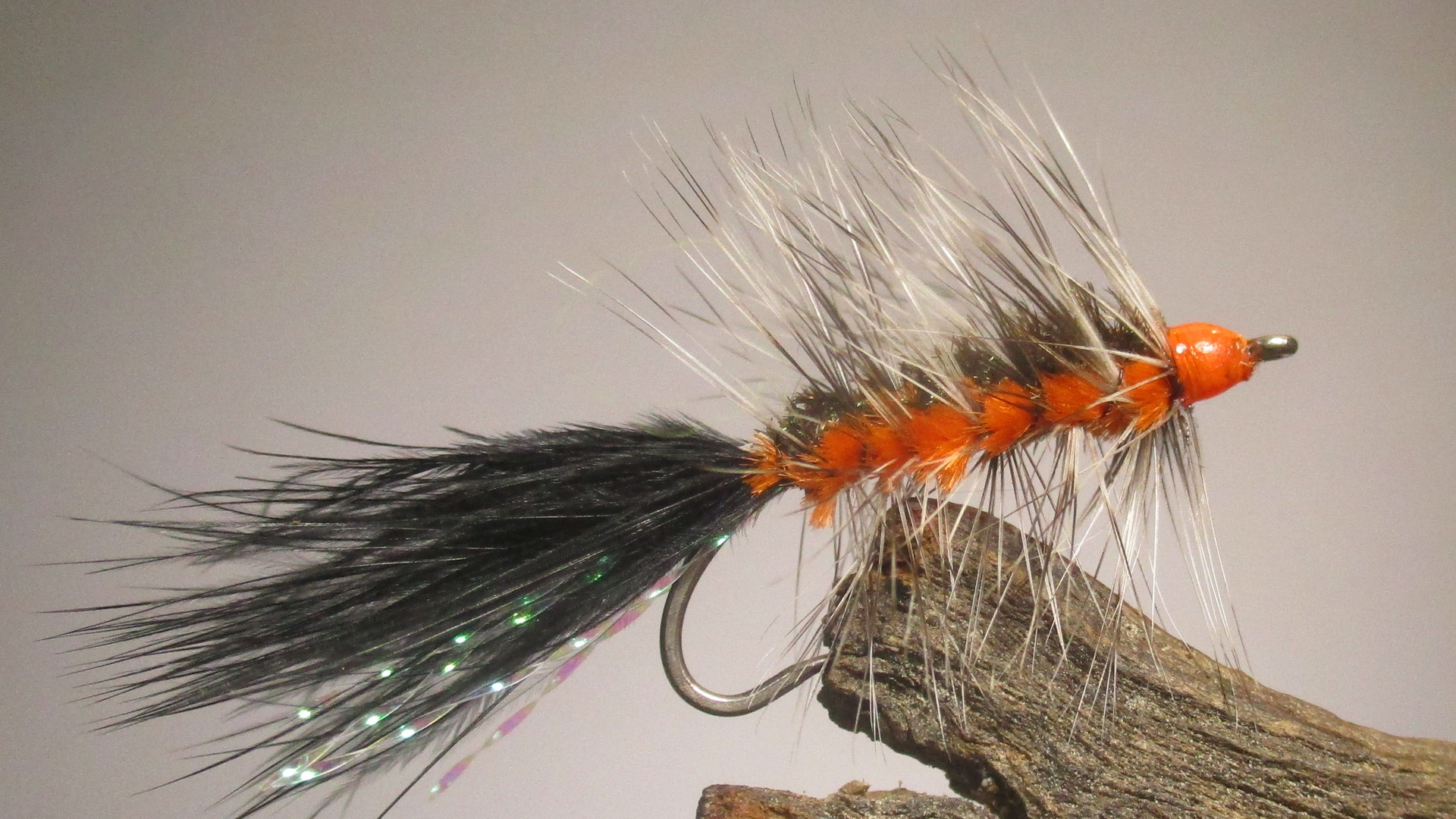
Tying an Orange Belly MICRO Woolly Bugger


This is a simple version of the classic Woolly Bugger, but tied as a “micro” for fishing with light tackle in smaller waters.

  • Hook: #8-12 3x long
  • Weight: 0.020" lead free
  • Thread: To match belly color
  • Tail: Mini Marabou, with 2-4 strands of flash
  • Rib: Fine wire
  • Belly: Chenille or yarn
  • Body: Peacock herl
  • Hackle: Any color

There's really no history on this pattern. I didn't find it in any book. Of course I didn't create it either-- I'm just calling it exactly what it is, an orange belly micro bugger. And I call it a micro woolly bugger because I usually tie these pretty small to fish with a 2- or 3-weight rod, sometimes even a 1-weight.

But what's cool about these little small streamers is that you can fish them as a streamer or as a big nymph. A lot of times I will fish this pattern by dead drifting it through a fast run or riffle and then at the tail of that run, just strip it like a regular streamer. And it'll catch fish in the fast or the slow water.

So this is a fun and easy pattern. No exotic materials and the color combinations are pretty much endless. So if you don't routinely tie and fish something like this, I would encourage you to give it a try. It's so simple and easy and this pattern simply catches a lot of fish.

Tying Moon’s Madam X


This version of the classic Madam X was created by Brandon Moon of Moonlit Fly Fishing. This one may be a bit easier to tie and will certainly be a bit more buoyant.

  • Hook: #10-12 dry fly or terrestrial
  • Thread: Body color
  • Tail: Natural deer hair
  • Head: 1-2 mm foam (color to match body)
  • Wing: Natural deer hair
  • Legs: Rubber
  • Thorax: Any fuzzy dubbing

I recently did something that I haven’t done in years, and that is buy flies. Let me tell you why I did this. One of the newsletters I subscribe to comes from Moonlit Fly Fishing. This is one of the newsletters I get that I actually read. Brandon Moon runs that shop and he sends it out about every week or so.

And in his last one, I noticed that he had a sale on some flies. So I clicked on it, went to their website, and checked them out. And he’s selling some really cool patterns. And the fly that really caught my attention was a Madame X, or a variation he calls it the Madam X Foam Striker.

If you've ever tied the original Madam X, which is a very popular and successful fly, it's not the easiest pattern as it's got deer hair for the head, which is then folded over becoming the wing. So, it can be a little bit challenging to get that just right. But Brandon's version uses foam for a head and the top part of the wing. And I think this one is probably a little bit easier to tie than the original Madame X and might even be more effective for me as I typically fish this fly as an attractor pattern, or maybe as a hopper.

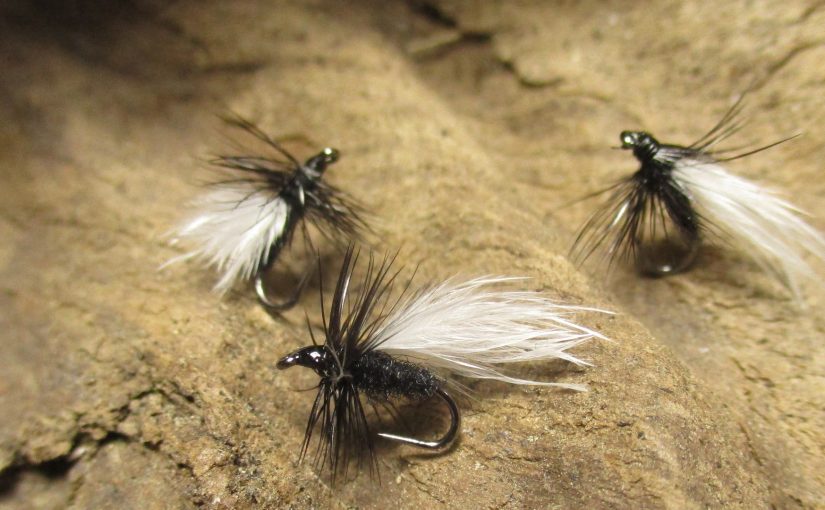
Tying the Chicken Fluff Midge


This is a simple dry fly pattern that will imitate midges all year, but has been particularly effective for me during the colder months.

  • Hook: #18-20 dry fly
  • Thread: Black
  • Body: Black dry fly dubbing
  • Wing: Fluff from the base of a hen feather
  • Hackle: Black or Grizzly

Now, I almost didn't feature this pattern on the channel as it's just embarrassingly simple. How it came about… early one January, I was about to head out to the Savage River. Mid-afternoon, so I was planning to get a couple hours of fishing in before sunset. After a quick look at my dry fly box, I realized I didn't have a lot of midges left over from several fishing days in December. So I took about a half an hour to tie some up.

Normally I would tie a pattern like this, with a simple dark body, either black or dun, then a bit of dark hackle (black or grizzly), and then something white for a wing. I would either use hackle tips or a white Para-post or nylon. Now I was at the farm and I didn't have any of that, but I did have some chicken feathers. So I tried a small tuft from the base of a natural hen feather, tied that in as a down-swept wing, and voila, a decent looking and easy-to-tie midge pattern.

That night on the Savage, I think I got three fish and the final one was about a 15-in wild brown right before sunset. For a low floater that sits directly in the surface film, this fly was surprisingly easy to see. Definitely for me, and apparently for the fish that were still coming up for it at dusk.

And it's worked well for me a few other times. Earlier this week I tried it on the headwaters of the Rapidan River in Virginia. I was mostly fishing caddis dry flies but I tied this on in in one of the slower runs and netted half a dozen native brook trout in less than an hour.

As simple as this thing is, it's done great for me several times since and has quickly become one of my favorite small midge patterns.

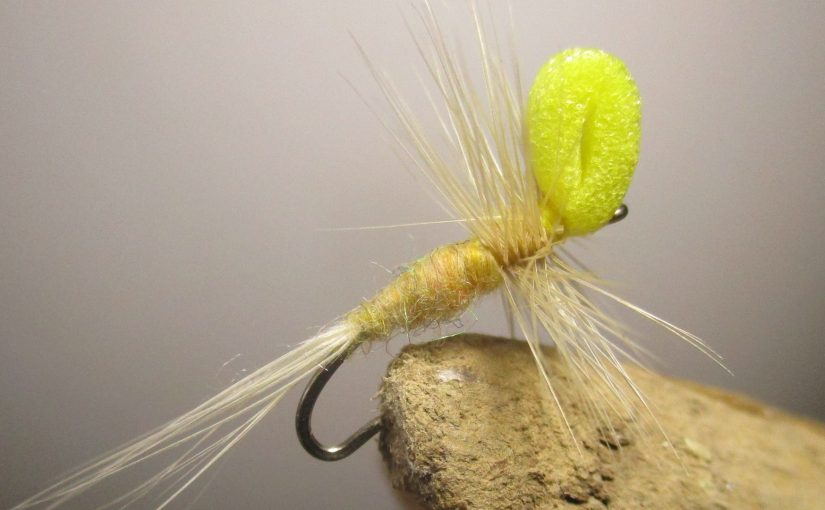
Tying the Foam Hat Sulphur Dry Fly


This foam-headed generic mayfly has brought me a lot of success this past year. Tied here as a sulphur, it can easily be turned into any mayfly you have a need to imitate. (Or a midge if tied small enough.)

  • Hook: #14-20, curved shank, 3x long
  • Thread: Any color to match the insect
  • Tail: Any color hackle fibers
  • Body: Any color dubbing
  • Hackle: Any color dry fly
  • Post: 2mm foam, any light color

I came up with this one last fall. I didn't really invent it as I'm sure I saw a picture of it somewhere and thought, I can use this fly. So, how I tied it originally was small, in sizes 18s and 20s on a little curved shank, 3X long hook. But I was tying it as a midge and in standard natural colors-- just a tail, body, and hackle. But I added one element to make it more fishable. A small foam loop, posted upright just in front of the hackle. And the fly did really well for me on a Savage River through December and into mid January.

Now the one I tied for the channel, I changed up a little bit. I made it bigger and turned it into a generic mayfly. In this case a sulfur, but in a bigger size as a generic mayfly, you could really make this pattern anything you want. It could easily be a March Brown, a PMD or a Blue Wing Olive. Just change the colors and the sizes accordingly.

And I typically fish this pattern in moderate to faster moving water. The fly is going to sit down on the surface film. The hackle, if you don't put floatant on it, will keep it barely on the surface but the foam “hat” will stay just out of the water. Now one cool thing about this is that after fishing it through a faster riffle or run, it might be a few inches under the surface, but with the foam, it's going to slowly come back up to the surface. That's when it looks like an emerging insect or maybe just a drowned adult. And I’ve had fish take it both as it’s drifting slowly on the surface, and when it’s sunken a few inches.

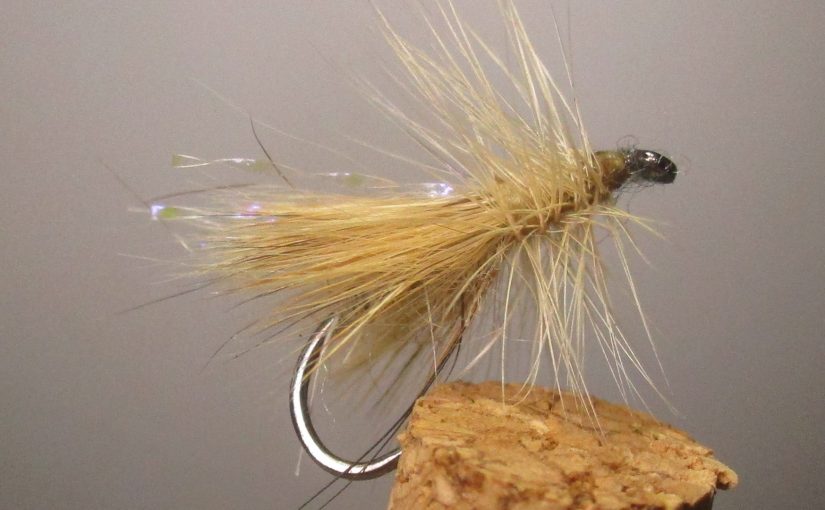
Tying the Coyote Caddis Dry Fly


A simple caddis dry fly I came up with for water that is somewhere between smooth-as-glass and very fast and riffled.

  • Hook: #12-16 dry
  • Thread: Tan
  • Body: Tan dubbing (synthetic)
  • Wing: Coyote mask (or fine hair like rabbit or fox)
  • Overwing: Thin Crystal Flash
  • Hackle: Light tan or cream

I fish a lot of caddis dry flies here in the Mid-Atlantic and I’ve got patterns that work in both extremes-- slow pools of crystal clear water, with the surface as smooth as glass, and very fast, choppy and riffled water. This pattern is a compromise between both of those situations.

How it's different is, instead of something hollow or coarse for the wing like a deer hair or elk, I use a very soft fine fur. This one uses coyote but rabbit or fox would work as well. Anything that is fairly fine and will give just the slightest hint of movement as it sits in the surface film.

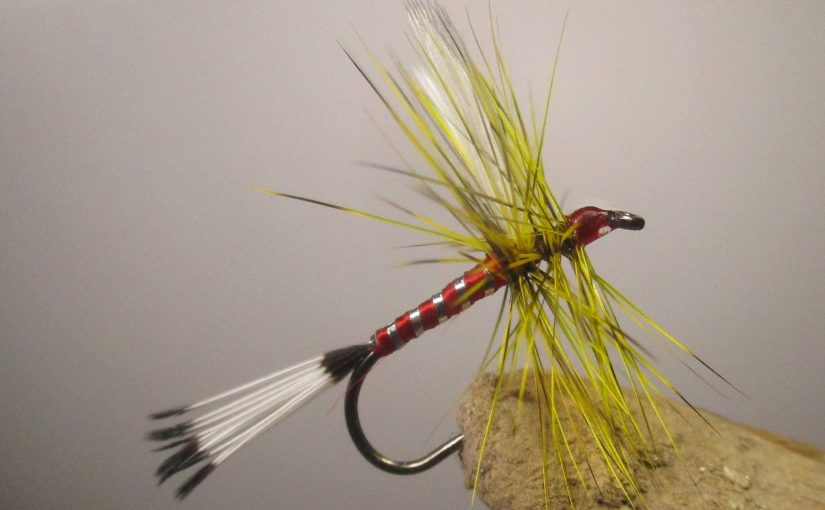
The Tropic Lightning – Attractor Dry Fly


This simple yet colorful dry fly attractor pattern was designed as a tribute to Jared McClanahan's uncle who was killed in action as a soldier with the 25th Infantry Division in Vietnam.

  • Hook: #12-16 dry fly
  • Thread: Red
  • Tail: Lady Amherst Pheasant Tippets
  • Wing: White Duck Slips
  • Rib: Silver Mylar Tinsel
  • Body: Red Floss
  • Hackle: Yellow

I've got an interesting pattern for you today, folks. A couple months ago I did a name the fly contest on the channel. The winning name for that one ended up being the Lemon Drop, which I think is a pretty cool name, but Jared McClanahan left a comment and said he'd like to name it the Tropic Lightning. He told me the backstory of his uncle, a soldier with the Tropic Lightning (the Army's 25th Infantry Division), which is a pretty historic division dating back from before World War II to current day.

Jared’s uncle was a soldier with the 25th Infantry Division, also called the Tropic Lightning. And his uncle was very much a hero in Vietnam. The division’s HQ came under attack and while a lot of lives were lost that day, his uncle saved the lives of many of his fellow soldiers. He was actually recommended for the Medal of Honor. It was downgraded to a silver star, awarded posthumously as sadly, his uncle lost his life during the raid.

Jared and I emailed back and forth a few times, both coming up with designs on a pattern that we could call the Tropic Lightning. Now what we came up with is not a terribly complex pattern. It's kind of a generic mayfly form, but it's very much an attractor dry fly. If I catch anything with this this spring, I'll certainly let you know. But if not, it was still a pretty fun one to tie and a pretty cool one to look at. So Jared, thank you for sharing your uncle’s story and helping me come up with this tribute fly.

The Lime Trude – a Brook Trout Attractor Pattern


There's no real name to this pattern, it's just a simple dry fly attractor pattern with a calftail wing tied trude style.

  • Hook: #12-16 dry fly
  • Thread: Black (or the color of your rib)
  • Tail: Moose body hair
  • Body: Floss, any color
  • Rib: Tying thread
  • Wing: White calftail
  • Hackle: Any dry fly

This this fly has no history. I don't even think it really has a name. It's just the next one I'm putting in my spring brook trout dry fly box. It is a little reminiscent of one called the Lime Green Trude, with the tail and the body, and the white calftail wing tied trude style.

Now, if you don't have any dry flies like this in your box, I would encourage you to give them a shot. And while calf tail is fairly buoyant, this fly is probably not going to be a high floater. It does have dry fly hackle up front which should keep it afloat, but the tail and body are probably going to sit down in the surface film. Even some of the white calf tail is going to get down in the surface film (by design), as I want the fist to see at least a bit of the wing. But what's just as important to old guys like me with glasses, we should be able to see this fly from pretty long way off.

Now, it is not a hard tie, but I think it's a pretty cool one.