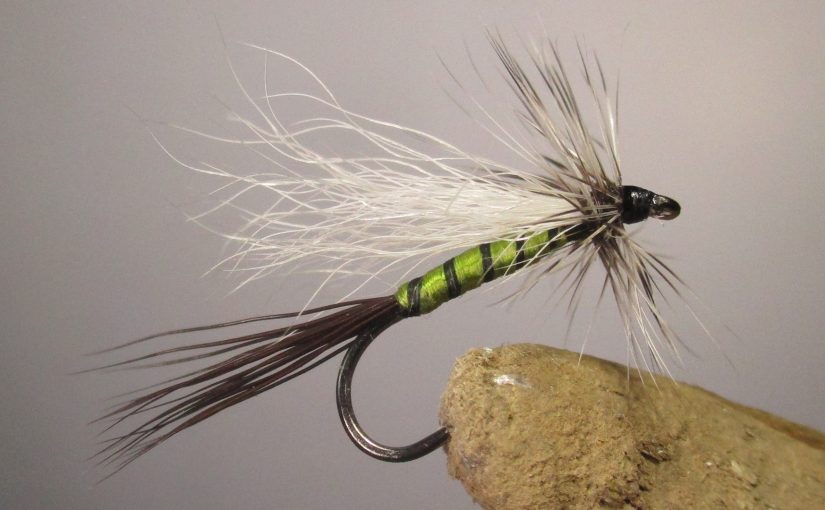
Tying the Pink Lady Bi-visible Dry Fly


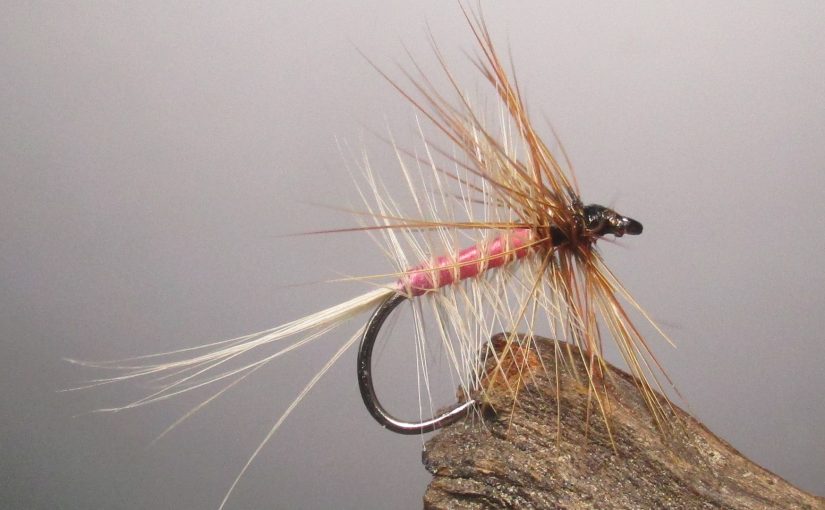
I found this pattern in “Fly Tying” by William Bayard Sturgis, published in 1940. If this isn’t a forgotten fly, it’s at least not a very well known one.

  • Hook: #12-14 dry fly
  • Thread: Black
  • Tail: Light ginger hackle fibers
  • Hackle: Light ginger palmered
  • Body: Pink floss
  • Collar hackle: Greenish/yellow (per Sturgis’ recipe)

Now, I’ve got a pretty interesting pattern for you today. I’m still working on my spring brook trout fly box, which pretty much means attractor dry flies. So, I started flipping through some of my old books, and I found a pretty neat pattern in William Bayard Sturgis’ “Fly Tying” from 1940. Sturgis had 33 dry flies in the book. A lot of them you will have heard of but there were a couple that I’d never seen or heard of. As I’m fairly well-read in archaic fly tying literature, I’m leaning toward calling a couple of these forgotten flies.

So, the one I chose to add to my box is a Pink Lady Bi-visible. Now, plenty of us have heard of the Pink Lady. Many of us have probably tied it, even fished it. But tied as a Bi-visible? That was pretty new to me. It’s really pretty simple– just a pink floss body with a light tail and then hackle palmered up through the body. And one thing Sturgis did mention in the recipe, he called for either a green or a yellow hackle up front. I tied one with green and it just didn’t look right. So that part of the fly I’m going to keep kind of closer to the original Bi-visible and use a brown hackle up front. But still, this is a pretty cool looking fly.

Tying The Usual – Fran Betters’ Signature Pattern


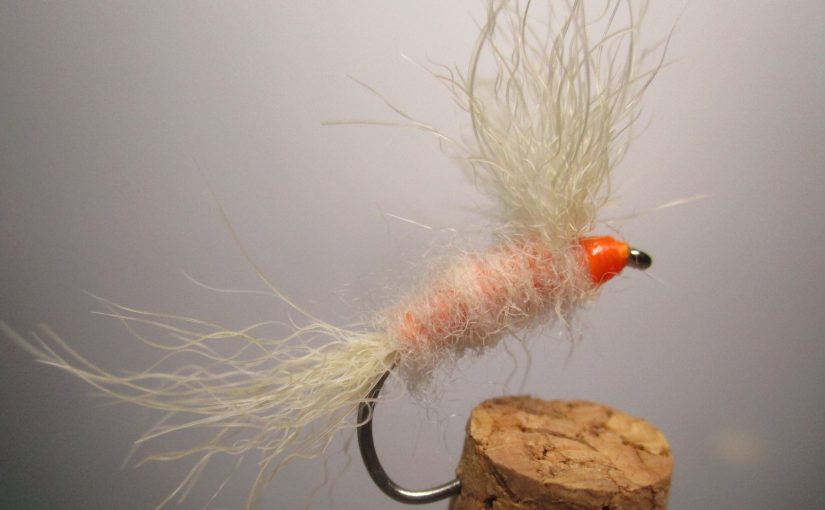
The 18th pattern in Mike Valla’s “Tying the Founding Flies,” the Usual was created by Fran Betters from upstate New York for fishing in the Adirondacks, and in particular the Ausable River.

  • Hook: #12-22 dry fly
  • Thread: Fluorescent Orange
  • Tail: Snowshoe Hare’s foot fur
  • Wing: Snowshoe Hare’s foot fur
  • Body: Snowshoe Hare’s foot underfur

Mike Valla’s “Tying the Founding Flies,” 2015, is available on Amazon at: https://amzn.to/354oSir

Fran Betters came up with this pattern probably sometime in the 1940s. He tied this as an experimental pattern, a one material fly made out of snowshoe hare’s foot fur. He said he had half a dozen of them in his shop and nobody was buying them– until a guy named Bill Phillips came in and bought them all.

Philips said they did really well for him and anytime anybody asked him what he was fishing, he just said, “Oh, the usual.” So Betters originally called the fly the “Philips Usual,” but over time it got shortened to what we know it as today, simply The Usual.

Now, I love a pattern like this as it’s pretty easy to tie and so shaggy looking that if you mess it up, you can just say, “I meant to do that.” Now, Valla says this can be tied from a 12 to a 22. I don’t know anybody that could tie this little shaggy thing on a 22. The one in the following video is tied on a size 12, but I did tie a handful of 14s for my spring brook trout box.

Tying the Lemon Drop – Attractor Dry Fly


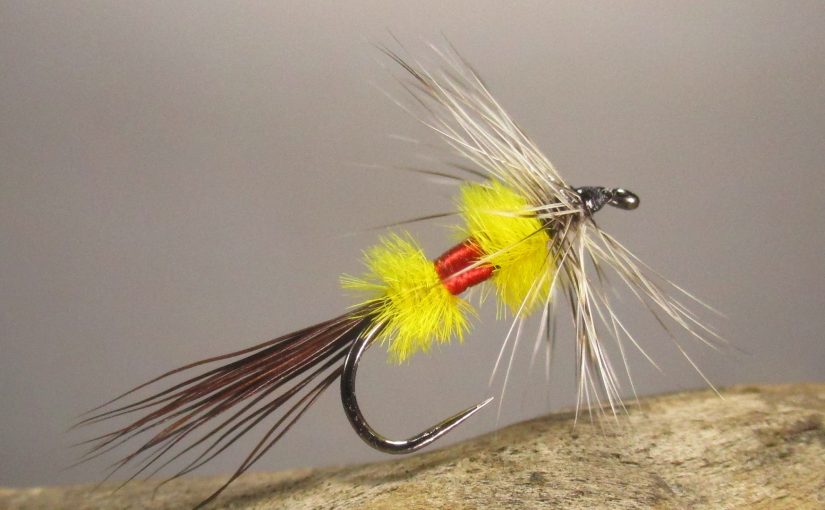
Another general attractor dry fly pattern I came up with for my small water brook trout box.

  • Hook: #12-16 dry fly
  • Thread: Black
  • Tail: Moose body hair
  • Body: Yellow ostrich herl with red floss band
  • Hackle: Grizzly

So, I just spent the last hour doing one of the most fun things we can do as fly tiers, and that’s sitting down at the bench and experimenting. And since I just started working on my spring brook trout dry fly box, I thought maybe I should come up with a new attractor pattern. And my first attempt, the first one I came up with, I liked it enough that I sat down and tied six of them.

Now, it’s definitely a unique pattern. It looks a bit like something tied in the “royal” style with the red floss band in the middle. But I didn’t put a wing on it and I did not use peacock hurl. I was thinking, what could I use when I saw some yellow ostrich herl on my pegboard. Now, ostrich herl itself, it’s not that unique but it’s not used very often in dry flies. And yellow ostrich is certainly not used that often.

Now if you don’t have yellow ostrich but you want to tie this thing, I think you could substitute a yellow synthetic, maybe some kind of fuzzy dubbing, and still put the red band in the middle.