
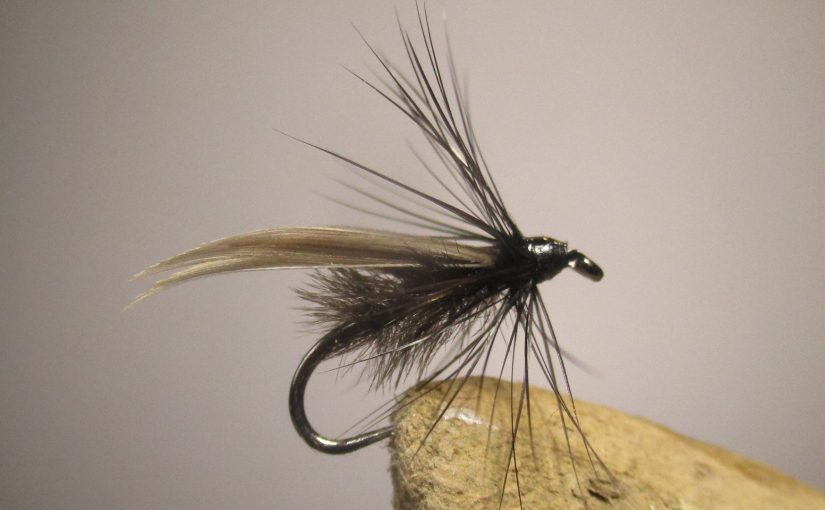
First written about in Dame Juliana Berners’ “A Treatise of Fishing with an Angle” in 1496, the Hawthorn is a medieval wet fly tied to imitate the Bibio Marci, also called a Hawthorn or St. Mark’s Fly.
- Hook: #12-14 Wet Fly
- Thread: Black
- Body: Black Ostrich Herl
- Wing: Light Starling Wing Slips
- Hackle: Black Rooster
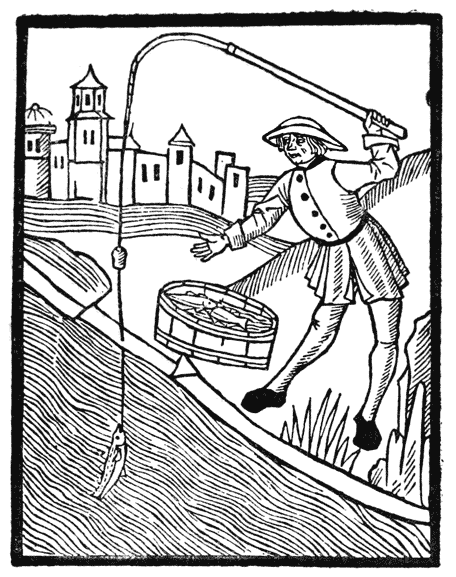
Now if you think matching the hatch is a relatively new concept in fly fishing, think about this. Dame Juliana Berners wrote “A Treatise on Fishing with an Angle” in 1496. Widely considered the first manual on fly fishing ever written– a full 150 years before Isaac Walton’s “Complete Angler.” Keep in mind that Berners was said to have been prioress of the St Mary of Sopwell, a nunnery near St. Albans in Hertfordshire. So she wasn’t writing this so people like us would be talking about her 500 years later. This was a practical guide.
She saw trout keying on a specific insect and said, “This is what you can use to catch them.” One of those insects was was the hawthorn or St. Mark’s fly as it typically emerges in April and May roughly corresponding to St. Mark’s Day on April 25th.
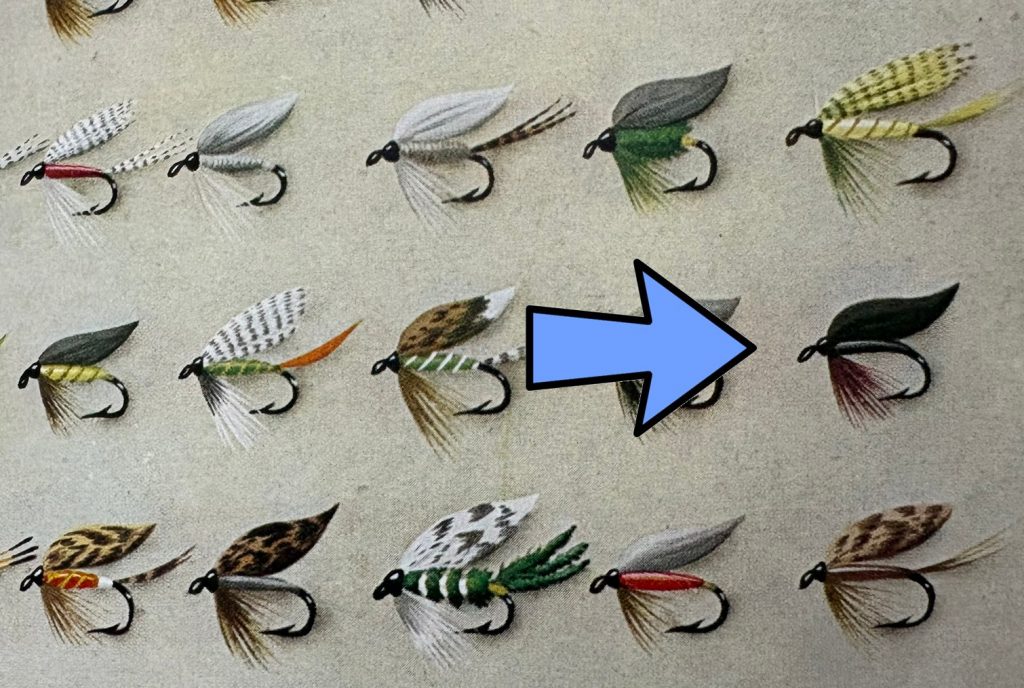
There are several variations of this fly out there. It can be tied as a dry or a wet fly– or a semi-dry which is somewhere in between. Ray Bergman’s version from his 1938 “Trout” is a pure wet fly. The one I’m tying here and going to fish next week in the Shenandoah National Park is from Mike Dawes’ “The Flytiers Manual” is pretty much a semi-dry.
Even though North American fly fishermen are not likely trying to match a hawthorn hatch, this 530 year old pattern is still relevant to us. This fly looks like a lot of bugs, that a lot of fish still like to eat.